Author of the Month
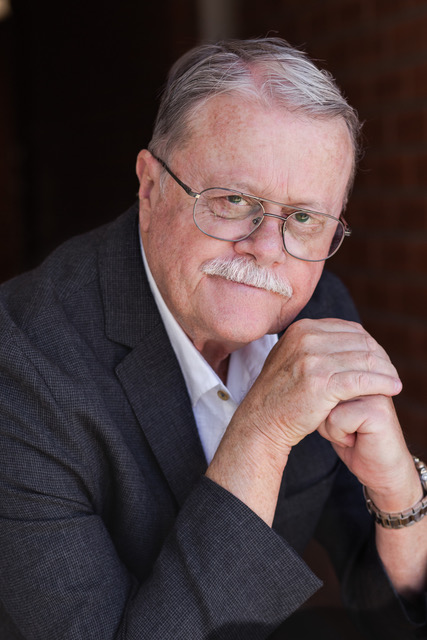
Jim Gibson, author of “Not Paid Eleven Cents an Hour to Think”
Jim Gibson was born in Santa Barbara, California in 1948. Growing up he was fascinated by the world around him, a curiosity that drove his love of reading at a young age. He has carried this passion for reading and desire for understanding throughout his life. Today, Jim is a happily retired grandfather and occasionally teaches abstract painting and other art classes in his community. He resides in Orange County, California.
What is your memoir about?
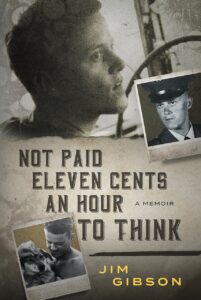 The memoir is about transformation. As the dust cover of my book notes, in 1968, I was flying to the other side of the world, barreling toward what I feared could be the end of my life. At that time, 500 American soldiers were dying every week in Vietnam. I was just 20 years old and held the rank of private. I was trained as a combat medic. Outfitted in brand new, scratchy, combat jungle fatigues and boots, I was sent to Vietnam, a place I had never been, to fight a war I didn’t believe in. Young men like me were being drafted against their will every day, called into a war that made no sense to them.
In recounting my experiences in Vietnam, my book details the disillusionment and struggles of draftees, the chaos and confusion of war, and the personal and societal displacement experienced by soldiers like me, who felt our lives were expendable for reasons we didn’t understand.
I have written this book for readers to understand what can happen if we are not careful. I highlight the feeling of powerlessness among the soldiers who had no real escape from the draft or the conflict. I want it to be a sobering reminder that as a people we haven’t learned from history. But the future is in our hands and only time will tell if we are able to save ourselves. This book is for everyone, but especially for young people who are that future.
“Not Paid Eleven Cents an Hour to Think” is an interesting title. How did you choose that?
After considering many ideas for my book’s title and seeing that they were already taken I chose to pick the title of the 10th chapter in my book, “Not Paid Eleven Cents an Hour to Think” as my book’s title. Authors are often advised to keep book titles short using as few words as possible, but I am that sort of artist that, while respecting the common advice, will paint my image as I want regardless.
Chapter 10 describes how we young, drafted Army recruits were trained to kill in an unnecessary war. We were subject to unbelievable and unrelenting psychological abuse. Command endlessly shouted out at us from the beginning how we were nothing and not capable of thinking.
Our drill instructors would yell at us, “You’re not paid eleven cents an hour to think!!!” This was actually true because we were paid something like $97 per month, and we were on duty 24/7.
Why write this book?
I had been toying with the idea of writing this book for many years because I always wanted to tell people about my experiences. In 1998, my mother passed away and about a year later I was going through her garage, and I found a shoe box. That shoe box contained all the letters I sent to my mother from Vietnam. I had written her every week. And I started reading those letters and that is what enabled me to create a chronological picture of what I went through. So my book is written in three parts: The first part is about what my life was like before I got drafted at 20, the second part is about what my life was like in the military and in Vietnam, and the third part is about what it was like coming out of the war and living the life of a Vietnam veteran. I wanted people to know my story and I especially wanted my kids to know my story.
Who are your favorite authors and favorite works?
I have been a reader all my life. My favorite writer as a kid was Jack London. I also like classic books like those by Hemingway and Steinbeck. I just read for the third or fourth time in my life a book by Herman Hesse called Siddhartha. Also, I like a book about a holocaust survivor called Man’s Search for Meaning by Viktor Frankel. It’s an incredible book about his struggle to survive at Auschwitz. I don’t tend to read novels; I usually read non-fiction.
Do you have any advice for memoir writers?
First of all, think about what you really want to say. What are you trying to get across to your readers? What is the meaning of this memoir? Also, write simply and directly. Stay away from flowery writing. That’s why I love London, Hemingway and Steinbeck. They just tell it like it is and don’t go off on tangents.
How to reach Jim Gibson
Email him at jimgibson348@yahoo.com